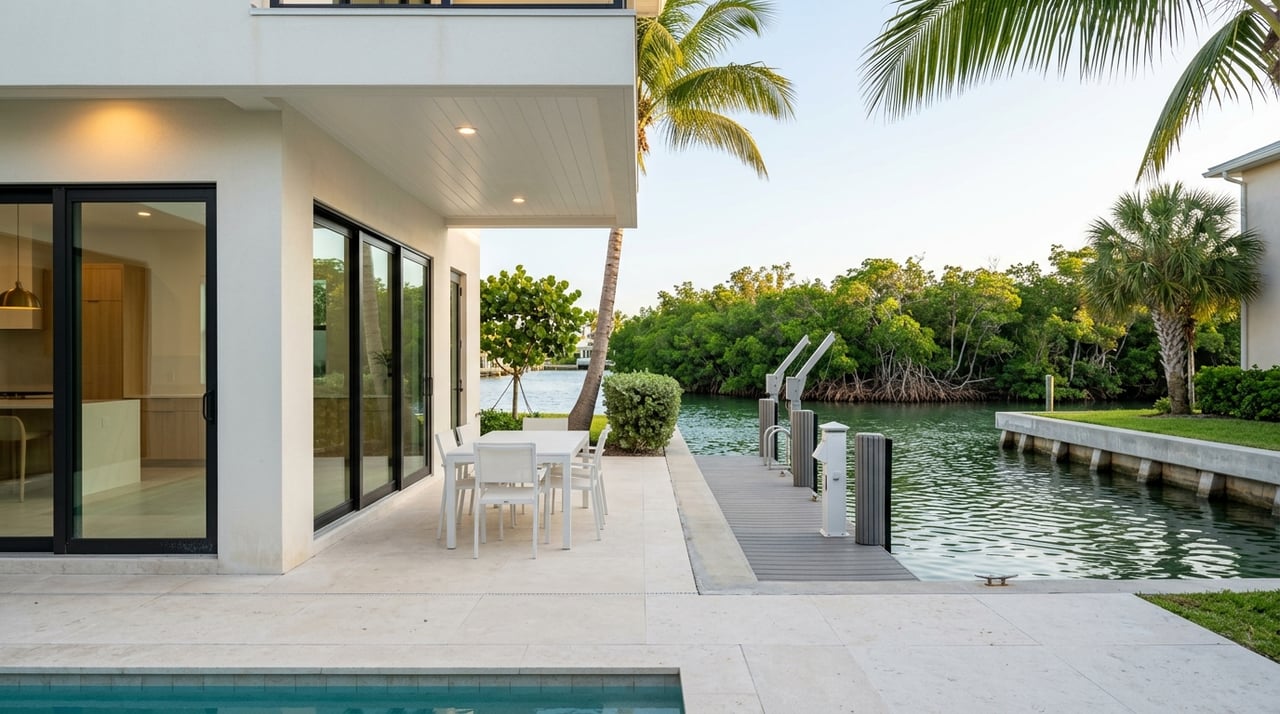
If you picture Marco Island as only a vacation spot, you might miss what makes it work so well for everyday life. Living here year-round is less about being on permanent holiday and more about settling into a coastal routine shaped by the seasons, the water, and a compact island layout. If you are wondering what daily life really feels like beyond a winter visit, this guide will walk you through the pace, amenities, and practical realities of full-time living on Marco Island. Let’s dive in.
Marco Island at a glance
Marco Island is a small island city with a 2024 estimated population of 16,554 and just 12.16 square miles of land, according to the U.S. Census Bureau. It is also a community with a distinct residential profile.
Census data show that 59.3% of residents are 65 or older, 89.4% of occupied homes are owner-occupied, and the median household income is $101,523. That helps explain why year-round life here often feels more like a homeowner-oriented island community than a large, fast-moving city.
For you as a buyer or future resident, that usually means a place where people value routines, property ownership, and access to the coast. It also means your experience may feel very different in January than it does in August.
Seasonal living shapes the island
One of the biggest things to understand about full-time life on Marco Island is that the island moves in seasons. Tourism plays a major role in the local economy across Naples, Marco Island, and the Everglades.
According to the Collier County Tourist Development Council, tourism supports more than 32,000 jobs in the region, and in 2024, more than 2.7 million visitors spent $2.8 billion locally. The county also notes that many winter and seasonal residents are property owners rather than counted visitors, so peak season can feel even busier than tourism numbers alone suggest.
Winter and spring feel more active
During winter and early spring, you can expect the island to feel livelier. Roads, restaurants, beaches, and public spaces tend to see more activity as seasonal residents return and visitors arrive.
This is also when the weather is most comfortable for long walks, beach days, tennis, pickleball, and boating. For many full-time residents, it is the season that makes outdoor living especially easy.
Summer and fall feel quieter
Late spring, summer, and fall usually bring a different rhythm. The county tourism office specifically markets these slower periods, which reflects the natural seasonal slowdown in the area.
For year-round residents, that often means a quieter island and a more local pace. You may find it easier to enjoy beaches, parks, and daily errands with less seasonal traffic, even though the weather becomes a much bigger factor in how you plan your day.
Weather affects everyday routines
Climate is one of the most important parts of year-round living on Marco Island. Based on NOAA climate normals for nearby Naples Municipal Airport, average temperatures are around 66°F in January and 83°F in July and August.
Average highs are near 75°F in January and around 91°F in midsummer. The National Weather Service also notes that South Florida’s wet season runs from May 15 to October 15, with 60% to 70% of annual rainfall falling during that period.
Summer requires more planning
If you live here full time, summer usually means planning outdoor time earlier in the day. The National Weather Service says heat index values can frequently reach or exceed 100°F in July and August, and afternoon storms are a regular part of the wet season.
That does not mean you stop enjoying the island. It just means your routine may shift toward morning walks, indoor breaks during peak heat, and keeping an eye on the forecast before heading to the beach or out on the water.
Storm readiness is part of island life
Living on Marco Island also means treating storm preparation as a normal part of homeownership. The city uses the CodeRED alert system to send emergency notifications for hurricanes, evacuation notices, floods, and other urgent events.
This is not unusual for coastal Florida, but it is something year-round residents take seriously. Having a plan, staying informed, and knowing where to get city updates are part of everyday preparedness.
Beaches and parks support daily life
A big part of the island’s appeal is that recreation is built into daily life. You are not relying on a long drive to enjoy the coast or find an outdoor activity.
The city’s beach access information notes that South Marco Beach has 70 parking spaces and restroom access. Tigertail Beach, which is county-owned, includes a bath house and five boardwalks through a mangrove-lined parking area to the beach.
Beach access is part of the routine
For residents, beach life is often more practical than glamorous. Depending on your location and eligibility, access may include passes for Residents Beach and Sarazen Park South Beach through MICA, and Collier County residents can obtain a free beach parking sticker at the Marco Island library.
That setup matters when you live here full time. Easy access makes it more realistic to fit in a quick beach walk, sunset stop, or morning outing without turning it into a full-day event.
Parks offer more than beach days
The island also has a strong mix of civic recreation spaces. Frank E. Mackle Park includes a playground, spray park, walking path, picnic area, teen center, bocce, volleyball, basketball, shuffleboard, soccer and football space, softball and baseball, and fishing.
The Racquet Center offers year-round tennis, pickleball, and racquetball. Veterans Community Park adds bocce courts, a farmers’ market, a walking path, picnic space, and special events, giving residents several ways to stay active without leaving the island.
Schools and library resources on the island
While Marco Island is often associated with retirees and second-home owners, families do have on-island options for everyday needs. Collier County Public Schools lists Tommie Barfield Elementary for grades K-5 at 101 Kirkwood Street, Marco Island Charter Middle for grades 6-8 at 1401 Trinidad Avenue, and Marco Island Academy for grades 9-12 at 2255 San Marco Road.
The island also has the Marco Island Branch Library at 210 S. Heathwood Dr. For year-round residents, that adds another practical community resource for reading, internet access, and routine local services.
Getting around is manageable
Marco Island is compact, which is one reason many residents find daily life convenient. You are living on an island, but you are not cut off.
Collier Area Transit serves the city with Route 21, the Marco Island Circulator, and Route 121, the Express Immokalee-Marco Island service. That public transit network can be useful for local trips and regional connections.
For broader travel needs, Collier County also operates Marco Island Executive Airport as a publicly owned general aviation airport serving residents, businesses, and visitors. If you split time between homes or travel privately, that can be a meaningful convenience.
Healthcare and services are close by
Healthcare access is another practical part of year-round living. On-island care options listed on local emergency contact pages include NCH Marco Urgent Care Center and Physicians Regional Clinic on Marco Island.
For hospital care, the county’s emergency contacts page lists regional facilities including Naples Community Hospital and Physicians Regional Medical Center locations on Collier Boulevard and Pine Ridge Road. In other words, you have a mix of island-based care and nearby mainland options.
Utilities and connectivity support modern living
Full-time living also depends on the basics working well. The city provides water and sewer service, and local emergency contacts list utility providers such as LCEC and FPL.
Digital access is also strong. Census data show that 98.3% of households have a computer and 93.7% have a broadband subscription, which supports remote work, part-time residence, and easy day-to-day connectivity.
For many buyers today, especially remote professionals and second-home owners, that is an important part of what makes Marco Island livable all year, not just seasonally.
Emergency infrastructure matters here
Island living comes with extra awareness around safety and response systems. Marco Island has notable emergency infrastructure for a city its size.
According to the city, Fire Station 50 serves as the Emergency Operations Center and includes a hardened safe room with standalone power and utilities that can remain operable for five days. It was also designed to withstand a Category 5 hurricane.
That kind of infrastructure will not change the weather, but it does reflect a community that plans seriously for coastal conditions. For full-time residents, that level of preparedness can offer real peace of mind.
What year-round living feels like
So what is year-round living on Marco Island really like? In many ways, it feels like a blend of natural beauty, seasonal change, and practical routines.
In peak season, the island is more active and social. In summer and fall, it often feels quieter and more local, though hotter, wetter, and more weather-aware. Throughout the year, daily life revolves around beach access, parks, water-oriented recreation, compact errands, and a civic setup that covers many of the essentials.
If you are considering a move, a second home, or a full-time transition, the key is to match the lifestyle to your expectations. Marco Island can be an excellent fit if you want coastal access, a homeowner-oriented environment, and a smaller community with strong everyday amenities.
When you are ready to explore what full-time or seasonal ownership could look like, Jennifer Drake can help you navigate Marco Island with the local insight and concierge-level guidance that make moving here feel much more manageable.
FAQs
What is year-round weather like on Marco Island?
- Year-round weather on Marco Island is mild and pleasant in winter, then hotter, wetter, and more humid from late spring through early fall, with the wet season running from May 15 to October 15.
What changes between winter and summer on Marco Island?
- Winter and early spring usually feel busier and more active, while summer and fall tend to feel quieter for residents but bring more heat, humidity, and afternoon storms.
What beach access options do Marco Island residents have?
- Marco Island residents can use public beach access points like South Marco Beach and Tigertail Beach, and some resident-specific access options and parking benefits are available through MICA and Collier County.
What parks and recreation options are available on Marco Island?
- Marco Island offers parks and recreation spaces including Frank E. Mackle Park, the Racquet Center, and Veterans Community Park, with amenities such as walking paths, court sports, playgrounds, events, and picnic areas.
What school options are located on Marco Island?
- On-island school options listed by Collier County Public Schools include Tommie Barfield Elementary, Marco Island Charter Middle, and Marco Island Academy.
What healthcare services are available near Marco Island?
- Marco Island has on-island urgent care and clinic options, and nearby mainland hospital access includes Naples Community Hospital and Physicians Regional Medical Center locations.
How do residents prepare for storms on Marco Island?
- Residents often prepare by monitoring city alerts through CodeRED, keeping emergency plans in place, and staying informed during hurricane season and major weather events.