Wondering why one Marco Island condo has a noticeably higher monthly fee than another that looks similar on paper? It is a common question, especially if you are comparing beachfront buildings, bayfront communities, or condos with marina access. The short answer is that condo fees often reflect far more than basic maintenance, and understanding what those dollars support can help you make a smarter buying decision. Let’s break it down.
What condo fees usually cover
In Florida, condominium common expenses are designed to pay for the operation, maintenance, repair, replacement, and protection of common elements and association property. Association budgets may also include categories like administration, management fees, maintenance, recreation, taxes, insurance, security, operating capital, and reserves.
That means your condo fee may support both everyday services and long-term building needs. On Marco Island, this matters because many condo communities offer a lifestyle package that goes beyond the building itself.
Some costs can count as common expenses even when they are not tied directly to a shared hallway, lobby, or pool deck. Florida law allows items such as security services, road maintenance, in-house communications, and bulk communications or internet services to be treated as common expenses when the governing documents or board contracts allow for it. Water and sewer service may also be included when the condominium uses a master meter.
Condo fees are commonly billed monthly or quarterly. The association disclosure materials should state how assessments are calculated and whether any separate rent or land-use fee applies to recreational or other commonly used facilities.
What condo fees may not include
A condo fee does not automatically cover every ownership expense. Florida disclosure rules make clear that some personal costs stay separate from the association budget.
These can include:
- Private telephone service
- Interior maintenance within your unit
- Privately contracted maid or janitorial service
- Direct utility bills billed to you individually
- Personal insurance premiums not obtained by the condominium
This is one reason two buildings with similar fees may still have different total monthly ownership costs. You want to look at the full picture, not just the dues line.
Marco Island amenity packages vary widely
One of the biggest reasons condo fees differ on Marco Island is the amenity mix. Local condo communities can range from relatively simple buildings with a pool and parking to more resort-style properties with beach access, boating features, fitness spaces, and staffed entry.
Representative Marco Island association websites show buyers often comparing amenities such as:
- Private beach access
- Beach or kayak launch areas
- Marinas and dock slips
- Boat storage
- Pools and spas
- Tennis and pickleball courts
- Fitness centers
- Social rooms
- Community kitchens
- Libraries
- Covered parking
- 24-hour guards
Many Marco Island buyers are drawn to low-maintenance coastal living, but not every building offers the same version of that lifestyle. If you want boating access, staffed security, multiple pools, or a large social component, the monthly fee may reflect those extras.
Resort-style amenities can raise fees
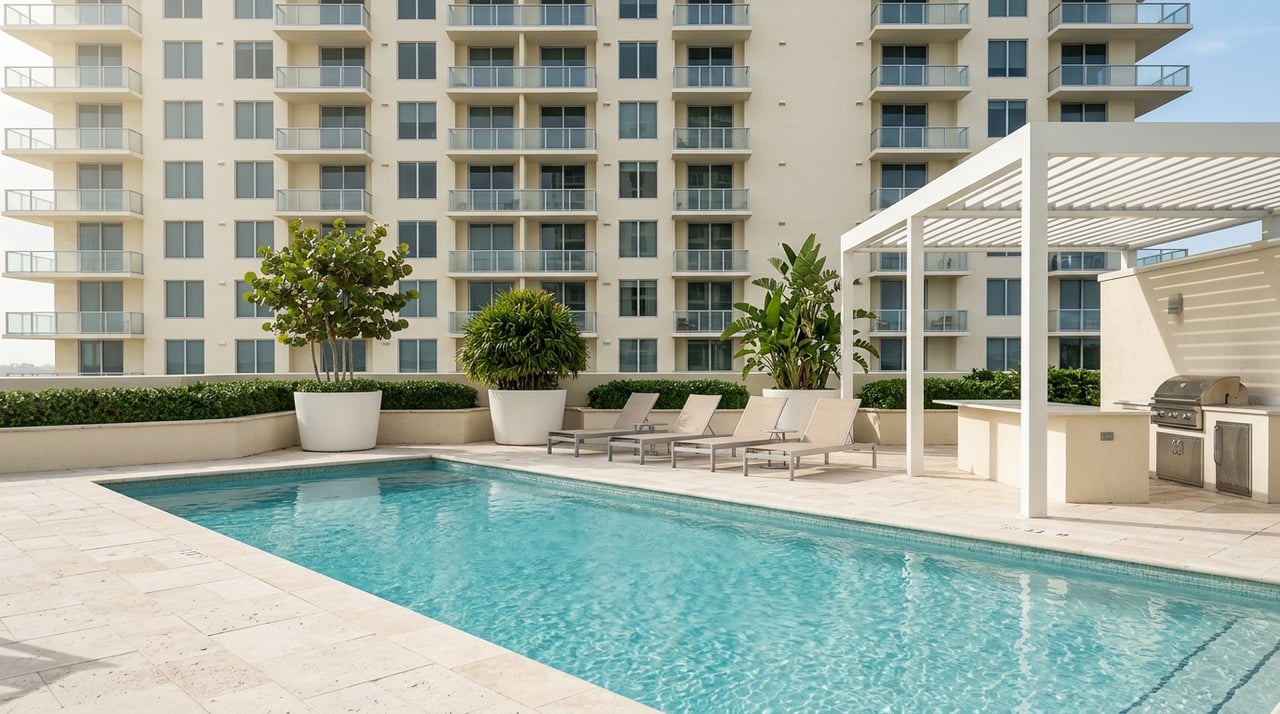
Some Marco Island communities bundle several amenities together. For example, current association materials for local buildings highlight combinations like pools with spas, marinas, fishing docks, kayak launches, tennis and pickleball, fitness facilities, social rooms, private beach access, and guard service.
That does not automatically make a higher-fee building a better value for every buyer. It does mean you should compare fees against what you actually plan to use and what it might cost if those features were billed separately elsewhere.
A building with a larger amenity package may also have more systems to maintain over time. Pools, elevators, fitness rooms, marina infrastructure, staffed gates, and common-area interiors all add to the operating and reserve needs of the association.
Separate amenity costs matter too
Not every amenity is always included in the regular condo fee. Florida disclosure rules require associations to state whether owners must pay rent or land-use fees for recreational or commonly used facilities and whether membership in a recreational facilities association is mandatory.
That is an important detail when you are comparing Marco Island condos. A building may appear to have a lower monthly fee, but some amenities could be supported by a separate lease, rental arrangement, or required membership structure.
Before you assume one community is the less expensive option, ask whether the amenities you care about are fully covered in the standard dues. A side-by-side comparison becomes much clearer when you separate included benefits from extra charges.
Why reserves are a major part of the story
Condo fees are not just about today’s landscaping, cleaning, or pool service. They also help support reserve planning for future maintenance and replacement needs.
In Florida, a structural integrity reserve study, or SIRS, is a budget-planning tool that identifies association-responsibility components and includes a plan to fund future maintenance and repairs. For residential condominiums that are three habitable stories or higher, the study is required at least once every 10 years.
For associations that existed on or before July 1, 2022, the Florida Department of Business and Professional Regulation stated that the SIRS deadline was December 31, 2025. DBPR also says that associations adopting budgets on or after December 31, 2024 generally may not waive SIRS reserves for the protected structural items.
Those protected items include:
- Roof
- Structure and load-bearing systems
- Fireproofing and fire protection systems
- Plumbing
- Electrical systems
- Waterproofing and exterior painting
- Windows and exterior doors
- Other items over $25,000 when failure would negatively affect those systems
For you as a buyer, this matters because reserve funding can have a direct effect on monthly fees and the likelihood of future special assessments. A building with stronger reserves may carry a higher fee now, but it may also be planning more proactively for major repairs.
Milestone inspections affect condo decisions
On Marco Island, inspection requirements are another reason it is smart to look beyond the monthly dues amount. Milestone inspections are separate from the SIRS process.
Florida law requires a milestone inspection for buildings that are three habitable stories or more when they reach age 30. In coastal areas, local enforcement agencies may require the inspection at age 25, and Collier County guidance reflects earlier deadlines for certain coastal buildings based on certificate of occupancy timing.
Collier County also states that the milestone inspection must be performed by a licensed architect or engineer. The county requires a sealed inspection report with a summary of material findings and recommendations.
This does not mean every older condo is a problem. It does mean inspection history, findings, and repair planning should be part of your condo comparison process, especially in a coastal market with many mid-rise and high-rise buildings.
How to compare Marco Island condos wisely
When you are evaluating Marco Island condos, it helps to think in terms of total monthly carrying cost and overall building health, not just the fee amount on a listing sheet. A lower number is not always the better deal.
In practical terms, a higher fee may reflect more amenities, stronger reserve funding, and broader building services. A lower fee may reflect fewer services, fewer amenities, or more reliance on future assessments when large projects arise.
Here are smart questions to ask before you decide a building is the right fit:
- What does the current monthly fee include?
- Is the fee billed monthly or quarterly?
- Are water, sewer, internet, or security included?
- Are any amenities tied to a separate lease, rent, or required membership?
- Can you review the current operating budget?
- What does the reserve schedule show?
- Is there a recent SIRS available?
- Is there a milestone inspection summary?
- Have any special assessments already been approved?
- Do recent board minutes mention planned projects or major contracts?
According to DBPR guidance, associations with 25 or more units must post items such as the annual budget, proposed budget, financial report, inspection reports, the most recent SIRS, bids, and certain contracts online. That can give you a clearer picture of what the fee supports and what expenses may be coming.
What buyers should focus on most
If you are buying a condo on Marco Island, the goal is not to find the lowest fee. The goal is to find the best match for your lifestyle, budget, and comfort level with the building’s financial and maintenance plan.
If you want a true lock-and-leave property with beach access, boating features, fitness amenities, and professional upkeep, a higher fee may make complete sense. If you prefer a simpler ownership model and fewer shared features, a lower-fee building may be a better fit.
The key is to compare condos on equal terms. Look at amenities, reserve funding, inspection history, and separate charges together so you can understand the real cost and the real value.
When you want help sorting through condo budgets, amenities, and building differences on Marco Island, Jennifer Drake can guide you through the details and help you compare options with confidence.
FAQs
What do condo fees usually cover in Marco Island condos?
- Condo fees often cover common expenses such as maintenance, repairs, insurance, management, security, recreation facilities, some utility services, and reserve funding, depending on the association documents and budget.
Are Marco Island condo amenities always included in the monthly fee?
- No. Some amenities may involve separate rent, land-use fees, or mandatory membership costs, and those should be disclosed in the condominium documents.
Why are some Marco Island condo fees much higher than others?
- Higher fees can reflect larger amenity packages, more extensive building services, stronger reserve funding, or greater maintenance obligations for features like pools, marinas, guard service, and fitness spaces.
What is a SIRS for a Florida condo building?
- A structural integrity reserve study is a budget-planning tool that identifies certain association-responsibility components and sets a funding plan for future maintenance and repair needs.
Are milestone inspections the same as reserve studies in Marco Island?
- No. Milestone inspections and reserve studies are separate requirements. Milestone inspections evaluate building conditions, while reserve studies help associations budget for future repairs and replacements.
What documents should you review before buying a Marco Island condo?
- You should ask to review the current operating budget, reserve schedule, most recent SIRS, any milestone inspection summary, and recent board minutes or contracts that show upcoming projects or costs.