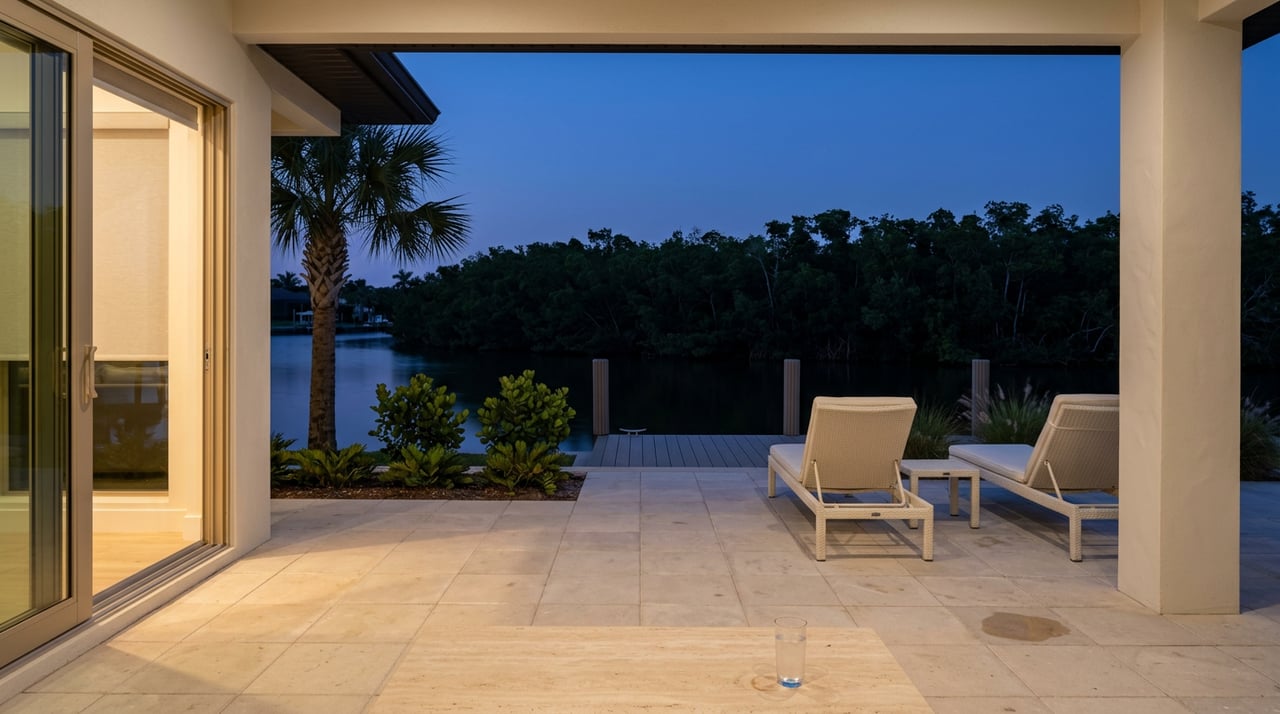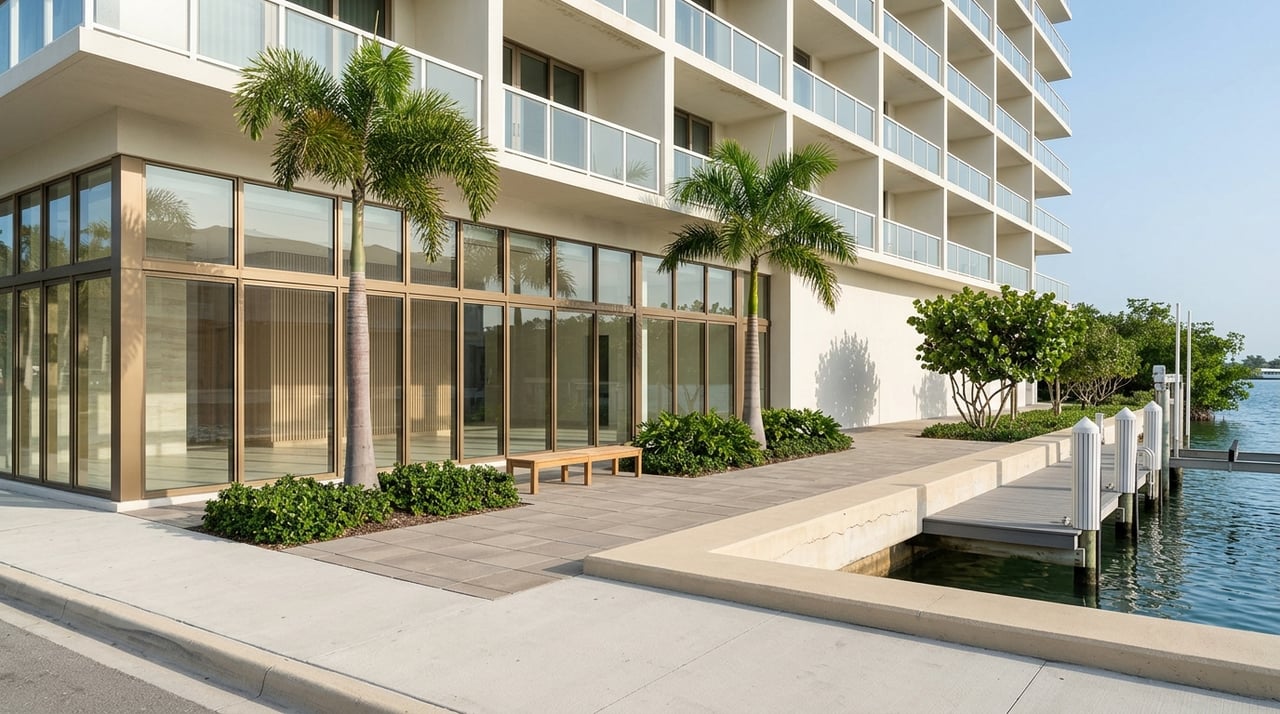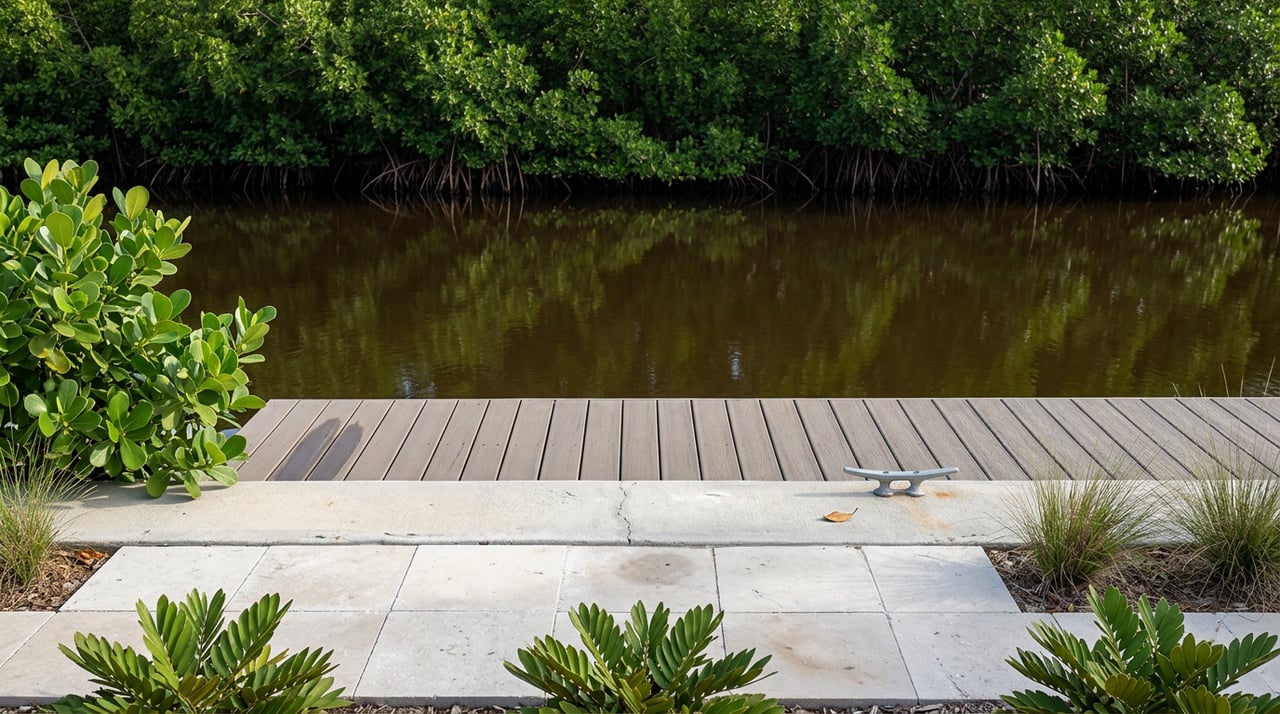
The kitchen sells the showing. The seawall closes the deal, or breaks it. On a canal home, the twenty feet between your pool deck and the water carries more transactional risk than any interior finish, and in a market where buyers finally have leverage, that risk has a price.
For most of the last five years, the "wet side" of a Marco Island property was a formality. Sellers set terms, inspection findings rarely moved the number, and buyers paid to be here. That has changed. Homes are sitting on the market roughly 101 days as of the three months ending May 2026, up from 88 a year earlier, and the June 2026 sale-to-list ratio has drifted to around 93%. Roughly nine in ten active listings have had a price reduction. A documented issue at the seawall, dock, or lift is no longer a soft ask. It is the pry bar.
This post walks the wet side the way an experienced local agent walks it with a client: what to inspect, what to ask for in writing, and where the specific Marco Island friction lives.
What "waterfront edge" actually means for a buyer
The interior inspection catches the roof, the AC, the WDO report your lender wants. None of that touches the structure that keeps the yard, pool deck, and dock approach from settling into the canal. On a Marco Island canal lot, the edge is four connected systems:
- The seawall. Concrete panels, cap, tiebacks, weep holes, and the soil column behind them.
- The dock. Decking, pilings, cleats, shore power, potable water, and the permit record showing every one of those was approved.
- The boat lift. Motor, cables, capacity rating, and whether that rating fits the boat the buyer actually owns.
- The route to open water. Depth soundings, bridge clearances, and no-wake segments that dictate whether the vessel in the garage can actually leave the dock at low tide.
Any one of those failing quietly can add five or six figures to the true cost of the home. In 2026, buyers have the room to price that in.
Red flags a marine inspector will call out
The pattern of failure on a saltwater canal is predictable. It runs in sequence, and a good inspection catches it early in that sequence. From least to most serious:
- Hairline surface cracks in the concrete cap and light salt bloom at joints. Cosmetic, but a baseline for comparison later.
- Persistent seepage through joints or around wall ends. The wall is still holding, but water is moving where it should not.
- Soft spots, small depressions, or sinkholes in the yard behind the cap. This is the tell that fine sandy soil is washing out through weep holes and joints, a process that runs relentlessly on Marco because tidal saltwater works the wall twice a day.
- Visible tilt, cap separation, or gaps between the seawall and the dock or pool deck. The soil column has moved enough to pull the hardscape with it.
- Horizontal or wide vertical cracks, exposed rebar, spalling, "kick out" at the base, or an exposed footer. These are signs of imminent or in-progress structural failure and change the conversation from repair to replacement.
A useful rule of thumb from local marine contractors: a dock older than roughly 15 to 20 years deserves a professional inspection regardless of how it looks from above. An underwater inspection every three to five years, or after any significant storm, catches problems at the piles and toe that the above-water view will not.
Repair scope drives the number. Polyurethane void filling behind an otherwise sound wall is a different order of magnitude from replacing panels and tiebacks. On a fully exposed residential lot, a replacement can run into the tens of thousands or higher, and it triggers a permitting process that has one very specific Marco Island quirk.
The Marco Island quirk buyers rarely hear about
Seawall panel fabrication is prohibited within Marco Island city limits. Any replacement project has to stage panels from off-island and coordinate that logistics under a Marine Staging Permit, which is typically issued for a 100-day window. That constraint is why a seawall replacement quoted casually as "a few weeks of work" can occupy the yard for the better part of a season once you count fabrication, staging, permit review, and the environmental timing windows that can apply.
For a buyer who plans to close in September and host family at Christmas, the timing math matters as much as the dollar figure. For a seller who ignored a soil void for two seasons, that same math is what a buyer's agent will use to justify a credit.
The permit paper trail to demand before you remove contingencies
The city treats the waterline as a heavily regulated zone. Seawall, dock, lift, electrical to the dock, and plumbing to the dock can each require separate permits. A property with clean, closed permits on all of that work is a different asset than one where the last owner "had a guy" replace a lift ten years ago without pulling anything.
Request, in writing, before your inspection window closes:
- Recorded permits and final inspections for the seawall, dock, and boat lift.
- Contractor warranties still in effect, and the license number of the contractor who did the work.
- Any engineer's report or repair estimate the seller has ever commissioned.
- A recent depth sounding, ideally within the last twelve months, from the dock to the maintained channel.
- The last dredge date on any shoal-prone segment along the route.
- HOA or condo documents governing slip use, leasing, or dock modification, along with the Florida Statutes 718.503 resale disclosures where the property is a condominium.
If the seller cannot produce the permit history, that is itself a finding. Collier County records will show what was pulled. Gaps between what exists on the water and what was ever approved on paper become the buyer's problem the day after closing.
The boat that "almost" fits
Two numbers set the outer edge of what the property can accommodate on the water: dock protrusion and lift capacity. Both are the kind of detail buyers assume the listing photo settled for them. Neither actually is.
Dock protrusion in Collier County is regulated by canal width. On canals 100 feet wide or greater, a dock can extend the shorter of 30 feet or 25% of the canal width. On narrower canals, the limit drops to 20%. A buyer arriving with a 42-foot boat may find that the existing dock is at the limit, and that the extension needed to berth the vessel safely will require a new application that weighs navigation, water depth, neighboring docks, and environmental criteria.
Lift capacity is the second number. A 10,000-pound lift installed for a previous owner's center console will not hold a modern 35-foot cabin cruiser. Motor condition and cable age matter, but the plate rating is the ceiling. Replacing a lift is a permitted project through the city's Department of Public Works.
Then there is the route. In parts of the Marco and Big Marco system, controlling depths are commonly around four feet at mean low water, and shoals shift. Fixed highway bridge clearances in the area sit around 55 feet, but side bridges and utility crossings vary. A sailboat owner or a buyer with a tall tower needs the full vertical and horizontal path confirmed before contract, not after.
For sellers preparing to list
The same market that gave buyers leverage rewards sellers who take that leverage away before the sign goes up. In 2026, a modernized, storm-resilient waterfront home commands the clearest premium on Marco, and the resilience story starts at the seawall.
A pre-listing marine inspection with a written report, current permits on file, a recent depth sounding, and a clean folder of contractor warranties does three things at once. It sets the price above the discount-hunting comps. It removes the buyer's biggest negotiating lever before the offer is written. And it prevents the late-inspection surprise that puts a deal back on the market at day 60 with a stale price.
Skip that work and the buyer's agent will build the credit into the offer anyway, using the same information you could have controlled the narrative on.
A few questions we hear
Does a seawall issue affect financing or insurance? It can. Lenders and insurers underwriting coastal properties look at seawall condition, and an active structural deficiency can affect both insurability and marketability. That is one reason the paper trail matters as much as the physical condition.
How much should I budget for seawall work I might inherit? Ranges are wide because pricing is driven by linear feet affected, volume of soil lost behind the wall, depth below the waterline, and the type of intervention. Minor patching or void filling can be modest. A full replacement on an exposed residential lot can run into the tens of thousands or more, plus staging and permit time.
We are buying remotely. Can this diligence happen without us on the island? Yes. Florida authorizes Remote Online Notarization, and most Marco closings can complete via RON or mail-away. The waterfront diligence itself is coordinated by a local agent, a qualified marine inspector, and the title company. Sight-unseen purchases work here when the wet-side checklist is run with the same rigor the interior inspection gets.
If you are considering a canal-front or bay-front home on Marco Island, or preparing to list one, the waterfront edge deserves its own conversation before the offer, not after. Live Marco Island coordinates the marine inspection, permit pull, and seller documentation that makes 2026's buyer leverage work for you rather than against you. Schedule a free consultation and we will walk your seawall with you.